How to Use Tax Harvesting to Save on Capital Gains ?
Welcome to our blog: How to Use Tax Harvesting to Save on Capital Gains! Our team of experts is here to help you understand smart ways to reduce the tax on your investment profits. Tax harvesting is a legal and effective strategy where you sell some investments that are losing value to offset the gains from your profitable ones. By doing this, you pay tax only on the reduced gains, saving a significant amount of money. This method works for both stocks and mutual funds and can be used strategically throughout the year, especially near the end of the financial year. In this guide, we’ll break down tax harvesting in a simple, step-by-step way, so you can start using it to save on your capital gains.
Tax Harvesting Explained: A Beginner’s Guide
Tax harvesting for capital gain, also called tax-loss harvesting, is a smart way to reduce the tax you pay on your investments. The idea is simple: if some of your investments, like stocks or mutual funds, have lost value, you can sell them to balance out the profits from your successful investments. By doing this, your overall taxable gains are lower, which means you pay less tax. This strategy is completely legal and widely used by investors to save money while managing their portfolios effectively.
The best part is, you don’t have to stay out of the market. After selling the loss-making investments, you can reinvest the money in similar assets to continue growing your portfolio. Tax harvesting can be used throughout the year, especially near the end of the financial year when you’re reviewing your gains and losses. It’s not just for experts—beginners can also use it to make smarter investment decisions. Over time, consistently using tax harvesting can help you keep more of your earnings and grow your wealth faster.
Why Tax Harvesting Matters for Investors ?
Reduces tax liability legally on capital gains
Allows smart reinvestment without losing portfolio control
Helps improve long-term returns by freeing up more money to invest
Beneficial for investors in stocks, mutual funds, ETFs, and other capital gain assets
Can be used throughout the year, especially near financial year-end
Helps manage portfolio risk by selling underperforming assets
Keeps more cash in hand for future investment opportunities
Encourages disciplined investment review and planning
Can enhance overall wealth-building strategy over time
Supports better financial goal planning
Helps offset gains from multiple investments
Easy to implement with basic knowledge of your portfolio
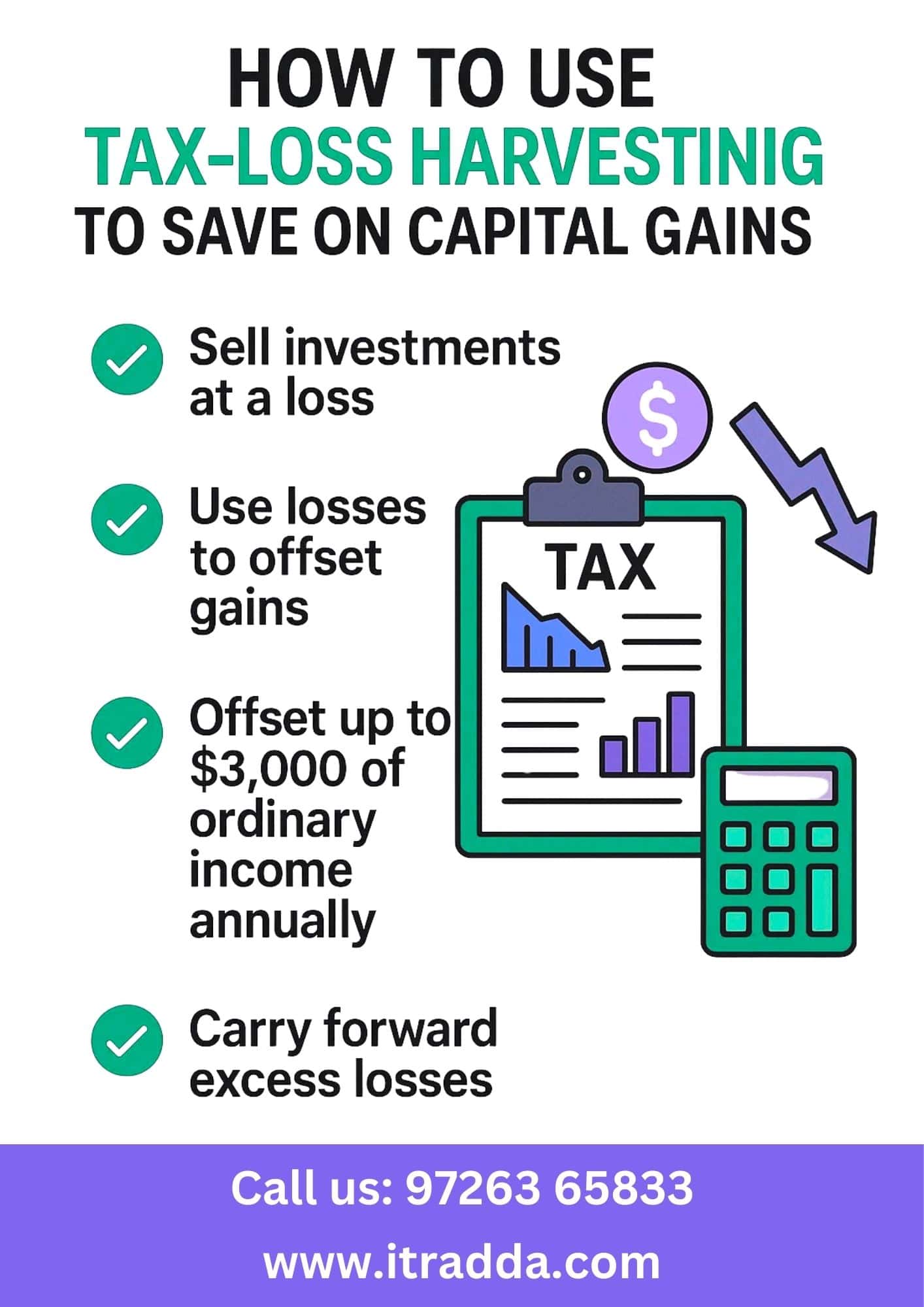
How Tax Harvesting Works to Reduce Your Taxes
Tax harvesting is a simple yet powerful strategy to lower the tax you pay on your investments. Here’s how it works:
Sell Loss-Making Investments: Identify investments, like stocks or mutual funds, that have lost value and sell them.
Offset Gains: The losses from these investments are used to balance out the profits you earned from other successful investments.
Lower Taxable Capital Gains: By offsetting gains with losses, your overall taxable capital gains are reduced, which means you pay less tax.
Reinvest Strategically: After selling, you can reinvest the money into similar assets to continue growing your portfolio without missing market opportunities.
Use Losses Across Years: If your losses are higher than your gains, you can sometimes carry forward the extra loss to offset gains in future years (depending on tax rules).
Regular Review Helps: Checking your portfolio periodically lets you use tax harvesting effectively throughout the year, rather than waiting until the financial year-end.
Works for All Investment Types: This method can be applied to stocks, mutual funds, ETFs, and other capital gain assets.
Improves Long-Term Returns: The money saved on taxes can be reinvested, helping your investments grow faster over time.
Documents You Need for Tax Harvesting
Before you start tax harvesting, it’s important to keep all necessary documents ready. This ensures the process is smooth, accurate, and fully compliant with tax rules.
Key Documents to Keep:
Investment Statements: Statements for stocks, mutual funds, ETFs, and other investments.
Purchase and Sale Proofs: Transaction receipts showing when and at what price you bought and sold your investments.
Capital Gains Reports: Reports from brokers or fund houses detailing your gains and losses.
PAN Card & Bank Details: For identity verification and linking tax calculations to your bank account.
Brokerage Account Statements: Useful for cross-checking transactions and tax calculations.
Dividend Statements (if applicable): To track any income received from investments.
Charges and Costs of Tax Harvesting Services
The cost of tax harvesting depends on how you choose to manage it:
Professional Advisor or Tax Consultant: Hiring an expert can cost anywhere from ₹5,000 to ₹20,000, depending on the size and complexity of your portfolio.
Online Platforms / Robo-Advisors: Some investment platforms offer automated tax-loss harvesting tools, usually for a small subscription or annual management fee.
Do It Yourself (DIY): If you manage tax harvesting on your own, there’s no extra monetary cost—just your time and careful tracking of transactions.
Step-by-Step Process to Save on Capital Gains
Review Your Portfolio: Go through all your investments, including stocks, mutual funds, and ETFs, and identify which ones are not performing well or are at a loss.
Calculate Gains and Losses: Determine the profits from your successful investments and the losses from underperforming ones. This helps you understand how much tax you can potentially save.
Sell Loss-Making Investments: Strategically sell investments that have lost value. These losses can be used to offset the gains from profitable investments, reducing your overall taxable capital gains.
Reinvest to Maintain Balance: If you want to keep your portfolio diversified and aligned with your goals, reinvest the money from sold investments into similar assets.
Report Gains and Losses Properly: Ensure all gains and losses are accurately reported in your income tax return to claim the benefits of tax harvesting.
Monitor and Repeat: Tax harvesting can be done periodically, not just at the year-end. Regularly reviewing your portfolio allows you to maximize tax savings over time.
Timing Tips for Effective Tax Harvesting
Timing plays a key role in getting the most benefit from tax harvesting. Here are some tips to use it effectively:
Plan Before the Financial Year Ends: Tax harvesting is most effective when done before the year ends, so any losses can be applied to offset gains in the same financial year.
Don’t Sell Too Early or Too Late: Wait until your losing investments have meaningful losses, but avoid waiting too long and missing potential gains on other investments.
Monitor Market Trends: Keep an eye on market movements and your portfolio’s performance to identify the best opportunities for tax harvesting.
Review Regularly: Checking your investments periodically helps you spot losses early and take advantage of tax-saving opportunities throughout the year.
Coordinate With Your Investment Goals: While saving tax is important, ensure that selling investments doesn’t hurt your long-term financial plans.
Key Rules and Limitations to Know in India
When doing tax harvesting in India, there are a few important rules to follow. Short-term losses can only reduce short-term gains, and long-term losses can only reduce long-term gains. If your losses are more than your gains, you can carry them forward for up to 8 years to save tax in future years. Avoid buying the same asset immediately after selling it at a loss, because this “wash sale” can cancel your tax benefit. Make sure to keep all transaction records, investment statements, and capital gains reports safe for verification. Also, only recognized assets like stocks, mutual funds, and ETFs qualify for tax harvesting—losses from assets like personal property or gold may not be allowed. Finally, report all gains and losses correctly in your income tax return to claim the benefits without any issues.
Common Mistakes Investors Make During Tax Harvesting
Selling without calculating actual gains or losses
Reinvesting too quickly and violating the “wash sale” rule
Ignoring paperwork and transaction proofs
Not considering transaction costs and fees while selling
Focusing only on taxes and ignoring long-term investment goals
Selling too early or too late, reducing effectiveness
Overlooking capital gains from multiple accounts or brokers
Failing to track carry-forward losses from previous years
Not reviewing portfolio regularly to spot tax-saving opportunities
Ignoring the impact of market trends on timing of sales
Your Trusted Expert for Tax Harvesting Services
Looking to save on capital gains tax legally and effectively? Our team at itradda.com is here to help you implement tax harvesting strategies with ease. We guide you through every step—from reviewing your portfolio to identifying loss-making investments and reporting gains correctly—so you can maximize your tax savings without worrying about mistakes.
With years of experience in investment planning and tax advisory, we make the process simple and reliable for both beginners and experienced investors. Contact us today at itradda.com or call +91 97263 65833 to schedule your consultation and start saving smartly on your capital gains.