Ultimate Guide to Tax Planning for Salaried Professionals FY 2025-26
Welcome to our blog Ultimate Guide to Tax Planning for Salaried Professionals FY 2025-26 . If you’re a salaried employee, managing taxes may seem tricky, but with smart planning it becomes simple and rewarding. In this guide, we’ll explain the latest income tax rules, deductions like Section 80C (ELSS, PPF, LIC), exemptions such as HRA and LTA, and other tax-saving options like health insurance premiums under Section 80D. You’ll also learn how to make the right choice between the old and new tax regimes, maximize savings through retirement contributions like NPS, and benefit from deductions on education loans and home loans. With timely planning, you can reduce your tax liability legally, avoid last-minute stress during filing, and redirect those savings towards your financial goals—whether that’s building wealth, buying a home, or securing your family’s future.
Why Tax Planning is Essential for Salaried Individuals
For salaried employees, tax is usually deducted at source (TDS), but that doesn’t mean you have no control over how much you pay. Smart tax planning is all about using available deductions, exemptions, and investment options to reduce your taxable income while also creating financial security. With the right approach, you not only save money but also make sure your finances work harder for you.
Here’s why tax planning is important for salaried professionals:
✅ Lower your taxable income – Claim deductions under sections like 80C, 80D, and 24(b) to reduce your tax liability.
✅ Choose the best regime – Compare the old and new tax regimes to see which one offers you more savings.
✅ Invest smartly – Options like ELSS, PPF, and NPS not only help save taxes but also grow your wealth.
✅ Stay stress-free – Plan in advance to avoid penalties, interest charges, or the rush of last-minute tax filing.
Income Tax Slabs and Regimes for FY 2025-26
For FY 2025-26, salaried taxpayers can choose between the Old Regime (higher rates but with deductions and exemptions) or the New Regime (simplified structure with lower rates and a higher tax-free limit, but fewer deductions).
Comparison of Slabs
| Taxable Income (₹) | Old Regime Rates | New Regime Rates (FY 2025-26) |
|---|---|---|
| Up to 2,50,000 | Nil | – |
| Up to 4,00,000 | – | Nil |
| 2,50,001 – 5,00,000 | 5% | 5% (from 4,00,001 onwards) |
| 5,00,001 – 10,00,000 | 20% | 10% (8,00,001 – 12,00,000) |
| 10,00,001 – 12,00,000 | 30% | 10% |
| 12,00,001 – 15,00,000 | 30% | 15% (12,00,001 – 16,00,000) |
| 15,00,001 – 20,00,000 | 30% | 20% (16,00,001 – 20,00,000) |
| 20,00,001 – 24,00,000 | 30% | 25% |
| Above 24,00,000 | 30% | 30% |
Standard Deduction & Rebate
Old Regime: Standard deduction of ₹50,000 on salary income.
New Regime: Higher standard deduction of ₹75,000 on salary income.
Section 87A Rebate (New Regime): If your taxable income (after deductions) is up to ₹12.75 lakh, your net tax liability is zero.
Note: Special incomes like short-term capital gains don’t qualify for the rebate.
Difference Between Old and New Tax Regimes
Both regimes have their pros and cons. The choice depends on your salary structure, investments, and how many deductions you actually use.
| Aspect | Old Tax Regime | New Tax Regime (FY 2025-26) |
|---|---|---|
| Tax Rates | Higher slab rates (5% to 30%) | Lower slab rates (5% to 30%) with more breaks in between |
| Deductions/Exemptions | ✅ Available (80C, 80D, HRA, LTA, Home Loan Interest, etc.) | ❌ Very limited (only standard deduction of ₹75,000, NPS employer contribution, and a few others) |
| Standard Deduction | ₹50,000 | ₹75,000 |
| Rebate (87A) | Up to ₹5 lakh taxable income → No tax | Up to ₹12.75 lakh taxable income (with deduction + rebate) → No tax |
| Best For | Employees with high deductions/exemptions (rent, investments, loans) | Employees with fewer deductions or who want simple filing |
| Filing Complexity | More paperwork (proof of investments needed) | Simple and hassle-free |
How to Choose the Right Regime for Maximum Savings
Picking the right tax regime depends on your salary structure and how many deductions you actually use.
✅ Go for the New Regime if you don’t claim many deductions or exemptions. It offers lower tax rates, a higher standard deduction of ₹75,000, and a tax rebate up to ₹12.75 lakh taxable income—making filing quick and stress-free.
✅ Stick with the Old Regime if you benefit from multiple deductions like Section 80C (PF, ELSS, LIC), HRA (house rent allowance), NPS contributions, health insurance, or home loan interest. These reduce your taxable income significantly and can save you more than the lower rates of the new regime.
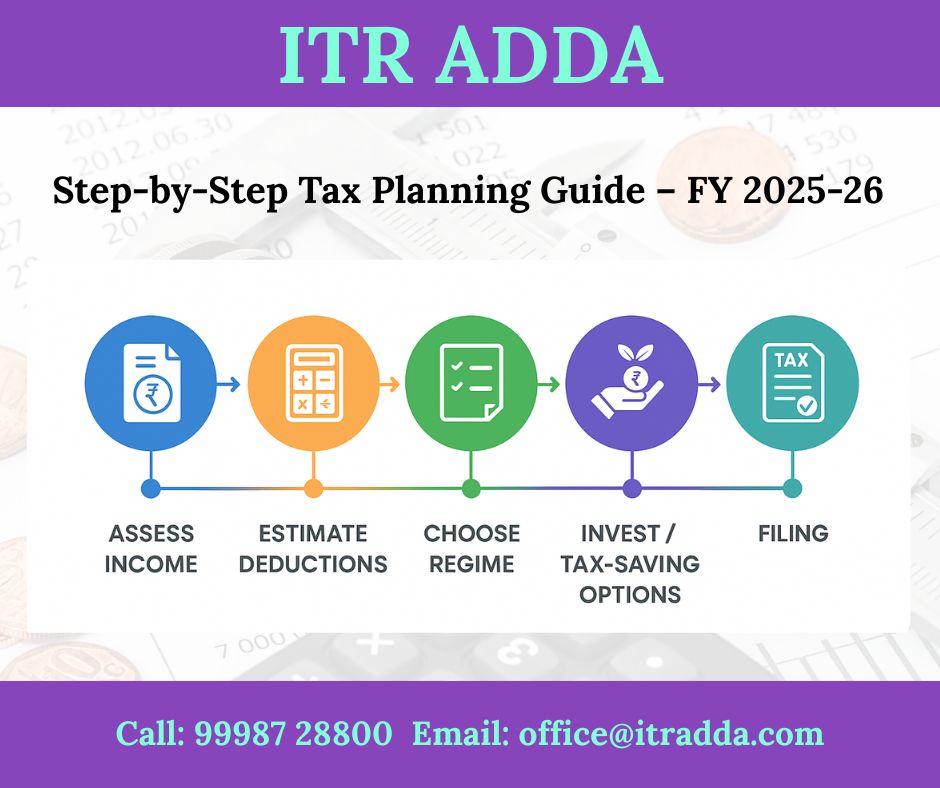
Documents Required for Tax Filing in FY 2025-26
Before filing your Income Tax Return (ITR), it’s important to keep all necessary documents ready. Having everything organized will make the process smoother, reduce errors, and ensure you claim all eligible deductions and exemptions.
Essential Documents:
Form 16 – Issued by your employer, showing TDS deducted and salary details.
Salary Slips – For verification of income and allowances.
PAN and Aadhaar – Mandatory identification documents for filing.
Investment Proofs – Receipts or statements for tax-saving instruments under Section 80C/80D/80CCD (LIC, PPF, ELSS, NPS, etc.).
Home Loan Documents – Interest certificate for home loan under Section 24(b).
Medical Insurance Receipts – Premiums paid for self, spouse, and dependents (Section 80D).
Bank Statements & Form 26AS – Details of income, TDS, and other tax credits.
Other Income Proofs – If you have rental income, capital gains, or interest from fixed deposits.
Donation Receipts – Under Section 80G for eligible charitable contributions.
Keeping these documents ready in advance ensures your ITR filing is accurate and helps you maximize tax benefits.
Section 80C – Best Tax-Saving Investments
Under Section 80C, salaried individuals can claim a deduction of up to ₹1.5 lakh from their taxable income. This is one of the most popular ways to save tax while also building wealth for the future. Some of the best investment options under 80C include:
Public Provident Fund (PPF) – Safe and long-term investment with tax-free interest.
Equity Linked Savings Scheme (ELSS) – Mutual fund option with the potential for higher returns and a 3-year lock-in period.
National Savings Certificate (NSC) – Government-backed savings with guaranteed returns.
Life Insurance Premiums – Premiums paid for policies for yourself, spouse, or children.
5-Year Fixed Deposits – Tax-saving fixed deposits offered by banks with a 5-year lock-in.
Section 80D – Health Insurance and Medical Benefits
Section 80D allows you to claim tax deductions for premiums paid on health insurance, helping you save taxes while securing your family’s health. Key benefits include:
Self & Family – Deduction of up to ₹25,000 for health insurance premiums for yourself, spouse, and dependent children.
Parents’ Health Insurance – Additional deduction of ₹25,000 (₹50,000 if your parents are senior citizens).
Preventive Health Check-Up – You can claim up to ₹5,000 for medical check-ups, even if no premiums are paid.
Other Important Deductions (80E, 80G, NPS, EPF)
Apart from Sections 80C and 80D, there are several other deductions that can help you save tax while meeting financial and social goals:
Section 80E – Education Loan Interest
You can claim a deduction on the interest paid on education loans for yourself, spouse, or children. This helps reduce your taxable income while investing in higher education.Section 80G – Donations to Charities
Donations made to approved charitable institutions are eligible for deduction, either 50% or 100% of the donation amount depending on the institution. This supports social causes while saving taxes.NPS – National Pension System (80CCD(1B))
Contributions to NPS give you an additional deduction of up to ₹50,000 over the 80C limit, helping you plan for retirement and save tax simultaneously.EPF – Employee Provident Fund
Both employer and employee contributions to EPF are eligible for tax benefits, and the interest earned is tax-free, making it a safe and long-term wealth-building tool.
Common Mistakes to Avoid While Filing ITR
Filing your Income Tax Return (ITR) correctly is crucial to avoid penalties, delays in refunds, or future notices from the tax department. Many salaried individuals make avoidable mistakes that can be easily prevented.
Key mistakes to watch out for:
Selecting the wrong ITR form – Make sure you choose the correct form based on your income type (salary, capital gains, business income, etc.).
Not reporting all income – Interest from bank FDs, savings accounts, or other sources must be included to avoid mismatches with Form 26AS.
Missing investment proofs – Keep receipts for deductions like 80C, 80D, or 80G handy to claim tax benefits.
Forgetting to verify ITR – Filing alone is not enough; verification (online or offline) completes the process and ensures your return is valid.
Due Dates and Penalties for Late Tax Filing
For salaried professionals, the due date for filing Income Tax Returns (ITR) for FY 2025-26 is 31st July 2025. Filing your return on time ensures you avoid penalties, interest, and unnecessary stress.
Penalties for late filing:
Filing after the due date but before 31st December 2025: Penalty of ₹5,000.
Filing after 31st December 2025: Penalty increases to ₹10,000.
Interest on pending taxes: Even if you pay late, interest may apply on the tax due under Sections 234A, 234B, and 234C.